Ideal Weight Calculator
Compare Devine, Robinson, Miller and Hamwi estimates with an adult BMI-based range. Use cm or feet, view kg or lb, and copy the four-formula comparison.
Ideal Weight Calculator
What this ideal weight calculator estimates
The tool compares four height-based equations: Devine, Robinson, Miller and Hamwi, and shows the weight range corresponding to BMI 18.5–24.9. These are reference calculations, not individualized target weights. The main figure is the midpoint of Devine and Robinson. The separate four-formula spread shows the lowest and highest comparison results.
Traditional ideal-body-weight equations have roots in drug dosing and historical height-weight tables. Robinson and colleagues’ 1983 paper describes deriving equations for dosage calculations. A later research paper on ideal weight and BMI discusses the history and differences between these approaches.
The formulas used in this tool
Let X be the number of inches above 5 feet (152.4 cm). Devine, Robinson and Miller give kilograms. Hamwi below gives pounds, converted with 1 lb = 0.45359237 kg.
| Equation | Male | Female |
|---|---|---|
| Devine | 50 + 2.3 × X | 45.5 + 2.3 × X |
| Robinson, commonly used rounded version | 52 + 1.9 × X | 49 + 1.7 × X |
| Miller (kg) | 56.2 + 1.41 × X | 53.1 + 1.36 × X |
| Hamwi (lb) | 106 + 6 × X | 100 + 5 × X |
The Robinson coefficients used here are the common rounded calculator version. They are not the exact regression coefficients printed in the original paper, so results can differ slightly from an implementation of the original regression.
Illustrative weight estimates by height
| Height | Devine, male | Devine, female | BMI 18.5–24.9 range |
|---|---|---|---|
| 160 cm | 56.9 kg | 52.4 kg | 47.4–63.7 kg |
| 165 cm | 61.4 kg | 56.9 kg | 50.4–67.8 kg |
| 170 cm | 65.9 kg | 61.4 kg | 53.5–72.0 kg |
| 175 cm | 70.5 kg | 66.0 kg | 56.7–76.3 kg |
| 180 cm | 75.0 kg | 70.5 kg | 59.9–80.7 kg |
| 185 cm | 79.5 kg | 75.0 kg | 63.3–85.2 kg |
The BMI column uses the same arithmetic for both sexes. It does not account for muscle mass, body proportions, medical conditions or individual health needs.
Worked example: 175 cm
175 cm is 68.90 inches, or about 8.90 inches above five feet. For the male equations, Devine gives 70.5 kg and the rounded Robinson formula gives 68.9 kg. Their midpoint is 69.7 kg. Miller gives 68.7 kg and the pounds-based Hamwi equation gives 72.3 kg. The four-formula spread is 68.7–72.3 kg, which describes disagreement between the equations. The BMI-based range is about 56.7–76.3 kg.
Why an “ideal” number is not a prescription
These formulas cannot tell you how much you should weigh, what your body composition is or whether a weight change is appropriate. A clinician considers more information than height and sex. Do not use this educational calculator to dose medication.
Below 152.4 cm, this tool does not extend the “inches above five feet” formulas or pretend they apply unchanged. It shows the BMI-based range and marks all four height-based formulas as unavailable. The adult BMI interpretation is intended for ages 20 and older.
Use the BMI calculator to see the category for your current height and weight. The body fat calculator estimates a different measure using a tape; the calorie calculator estimates daily energy needs.
Why Hamwi can differ between calculators
This tool implements Hamwi’s pounds-based equations, as reproduced in Peterson and colleagues’ comparison of ideal-weight equations, Table 3. Some calculators use rounded kilogram coefficients, which can give a slightly different answer. The formula table states the version used here.
A wider spread does not establish which formula suits you. It shows how much the choice of equation changes the result for the same inputs. None measures body composition or supplies an individual target weight.
Copy or print your calculation
Open How your result is calculated to see the arithmetic for your current inputs. The steps use the same equation as the result; intermediate numbers are rounded for reading.
Copy results includes inputs, labelled results, calculation steps and notes. Print / save PDF opens a report preview, then your browser’s print options. Choose Save as PDF if your browser supports it. Check the report before sharing: it contains the measurements you entered. Reset example restores the sample values while keeping your main measurement units. These actions run on your device; the tool does not keep a calculation history.
Common questions
Why do Devine and Robinson give different weights?
They use different starting values and increments per inch. Neither establishes a uniquely correct weight for an individual.
Is the midpoint my target weight?
No. It is the arithmetic average of two formula estimates, shown for comparison. It is not a recommendation to gain or lose weight.
Can I enter feet and inches?
Yes. Select feet and inches for height. Select kilograms or pounds separately for the results.
What happens below five feet?
The tool shows the adult BMI-based range and withholds all four height-based formula results rather than extending the equations below their reference height.
Does age affect these equations?
These four equations do not contain age. That does not mean age is irrelevant to health or weight assessment. These are adult educational calculations.
Written and maintained by Rowan Hale, the site author’s pen name. Updated September 13, 2026. No medical or dietetic qualification is claimed. Read our editorial policy or report a calculation error.
The other calculators
All five run together on the health and fitness calculator hub.
Read the reasoning
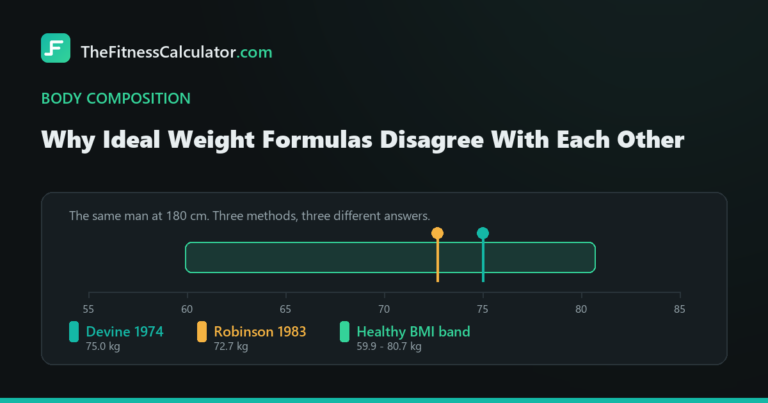 Why Ideal Weight Formulas Disagree With Each OtherCompare Devine, Robinson, Miller and Hamwi formulas, including their different outputs and why none defines a personal ideal weight.
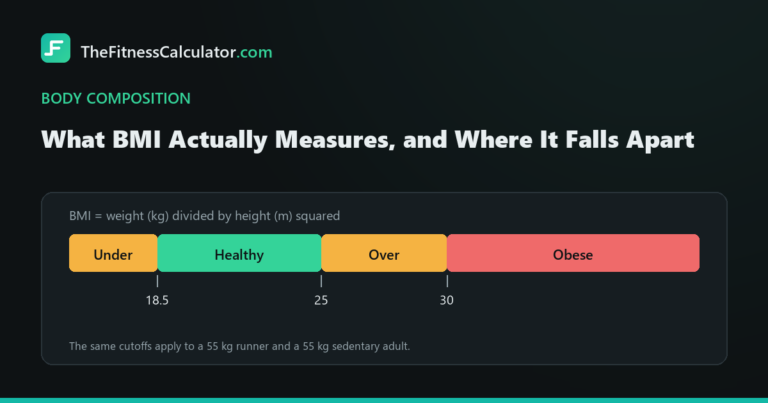 What BMI Actually Measures, and Where It Falls ApartLearn how adult BMI is calculated, where its categories come from, and why it cannot diagnose health or distinguish muscle from fat.
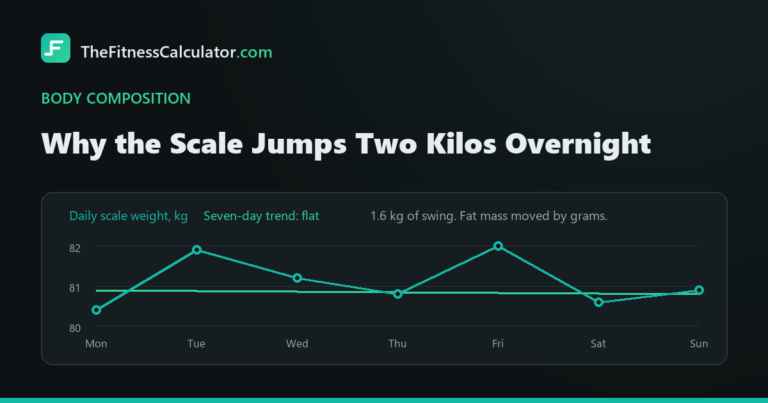 Why the Scale Jumps Two Kilos OvernightLearn how water, food and measurement conditions affect scale weight, and when an unexplained change needs medical advice.